x
R
O
A
M
I
N
G
Good luck with shopping. Call us: (555)-172-244-7888


Categories
Contact info
- Our office 104 New City Road E13 9PY London
-
Phone
+44 7360519808
- Email info@roamingbd.com
By: Rafi September 14, 2026 1 month ago
We live in a culture engineered around obsolescence. Every season, store shelves flood with lightweight synthetic fabrics designed to survive a few cycles in the wash before losing their shape, fraying at the seams, or surrendering to a broken plastic zipper. For modern travelers, this throwaway model turns every journey into a disposable experience.
True craftsmanship reject this cycle.
Heirloom quality isn’t an archaic marketing sentiment; it is a practical design philosophy. It means creating garments, bags, and tools with materials so resilient and construction methods so uncompromising that they outlive the rapid swing of trend cycles and accompany you for decades of open-road exploration.
The Anatomy of an Heirloom
What separates a temporary accessory from an heirloom piece isn’t a higher price tag—it is intentional engineering. When you look closely at field-grade equipment, specific construction choices stand out immediately:
-
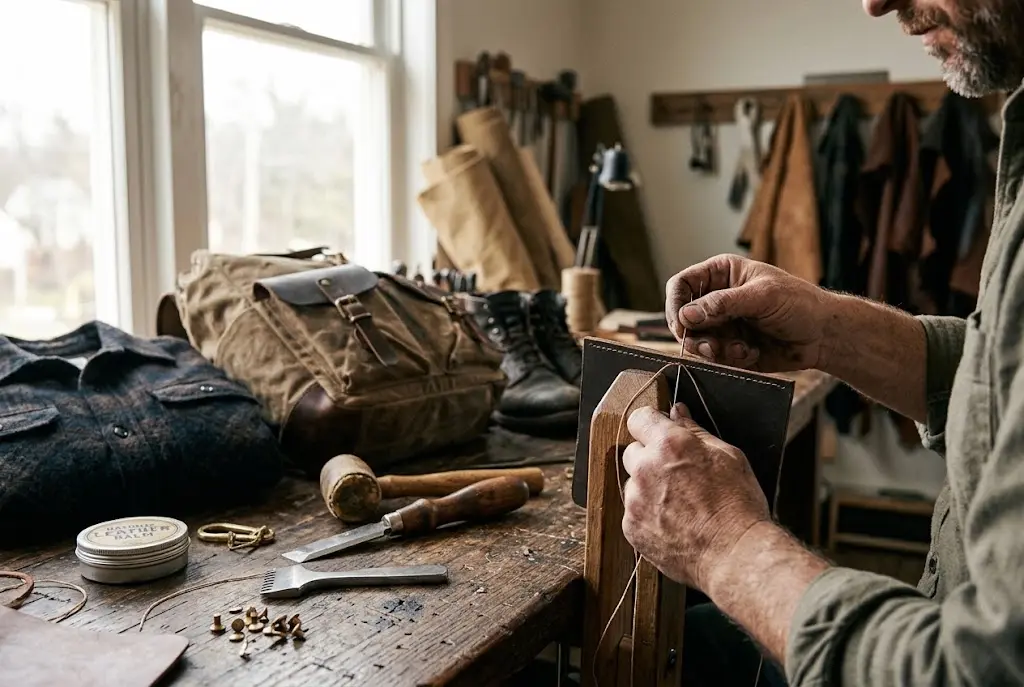
Solid Brass and Copper Hardware: Cast hardware does not snap under load. Solid brass buckles, rivets, and D-rings develop a subtle, weathered tarnish over time while maintaining their structural integrity under heavy trail loads.
-
Heavy-Gauge Saddle Stitching: Where mass-produced bags rely on delicate nylon threads that unravel if a single loop breaks, artisan goods employ thick, waxed linen or bonded thread. Even under tension, hand-tacked stress points hold fast through years of abuse.
-
Dense, Self-Healing Canvas: Heavyweight waxed cotton canvas naturally repels moisture, resists thorns and briars, and can be rewaxed seasonally to restore its factory weatherproofing.
-
Unlined, Full-Grain Leather: Thin synthetic linings are almost always the first point of failure in luggage. True heirloom construction utilizes thick, unlined vegetable-tanned hides that need no synthetic backing to hold their shape.
The Contrast of Slow Craftsmanship
Fast fashion values speed, high volume, and uniform synthetic perfection. Slow craftsmanship values provenance, patience, and character.
When a bag is cut from dense full-grain hide, every scar, grain variation, and wrinkle tells a story of the animal and the tannery. As you carry it through sun, mist, and transit terminals, it drinks in the elements. Hand oils darken the carry handles; friction softens the corners; rain and road dust imprint subtle nuances into the grain.
Instead of deteriorating, the piece matures alongside you. The gear becomes an archive of your personal geography—a tactile map of every campsite pitched, train boarded, and trail walked.
Repair Over Replace
The ultimate test of heirloom gear is repairability. Mass-market apparel is sealed, glued, and welded together in ways that make professional repair impossible. When a seam tears or a pull tab snaps, the item is destined for a landfill.
Heirloom pieces are built with modularity in mind:
-
Leather strap assemblies are riveted or stitched so a cobbler can replace them decades down the line.
-
Waxed jackets can be re-proofed with a tin of natural wax and an afternoon by the fire.
-
Heavy boot soles are Goodyear-welted, meaning they can be resoled repeatedly as the tread wears smooth against rock and tarmac.
This connection to our possessions fosters a different relationship with the outdoors. We stop consuming gear and start curating dependable companions.
Carrying the Story Forward
There is a quiet dignity in owning something that will outlive you. A rugged duffel that serves you across continents today could easily become your son’s weekend bag or your daughter’s college pack thirty years from now.
Choosing heirloom quality is a vote against the ephemeral. It is an investment in authenticity, a commitment to natural materials, and an appreciation for the master makers who still believe that if an object is worth building, it is worth building to endure.
Invest in the journey. Choose gear that lasts.

The Rewaxing Ritual: A Hands-On Guide to Weatherproofing Waxed Canvas
 Rafi September 14, 2026
The Minimal Nomad: Packing Rugged Essentials for a 48-Hour Escape
Rafi September 14, 2026
Rafi September 14, 2026