x
R
O
A
M
I
N
G
Good luck with shopping. Call us: (555)-172-244-7888


Categories
Contact info
- Our office 104 New City Road E13 9PY London
-
Phone
+44 7360519808
- Email info@roamingbd.com
By: Rafi September 14, 2026 1 month ago
Long before synthetic laminates and chemical waterproofing membranes took over outdoor apparel, Scottish mariners discovered a simpler, tougher solution: impregnating dense cotton sailcloth with natural oils and wax. The result was a fabric that defied ocean spray, blocked punishing gales, and endured years of relentless exposure.
Waxed canvas remains one of the most resilient, weather-resistant textiles ever created. Yet, unlike technical synthetic fabrics that degrade and peel with age, waxed canvas is entirely renewable.
Over miles of trail use, friction points around the elbows, seams, and shoulder straps naturally shed their wax barrier. When water stops beading on the surface and starts soaking into the weave, your gear isn’t failing—it’s simply ready for the rewaxing ritual.
Here is how to restore full weatherproof performance to your favorite jacket, duffel, or rucksack at home.
The Tools of the Craft
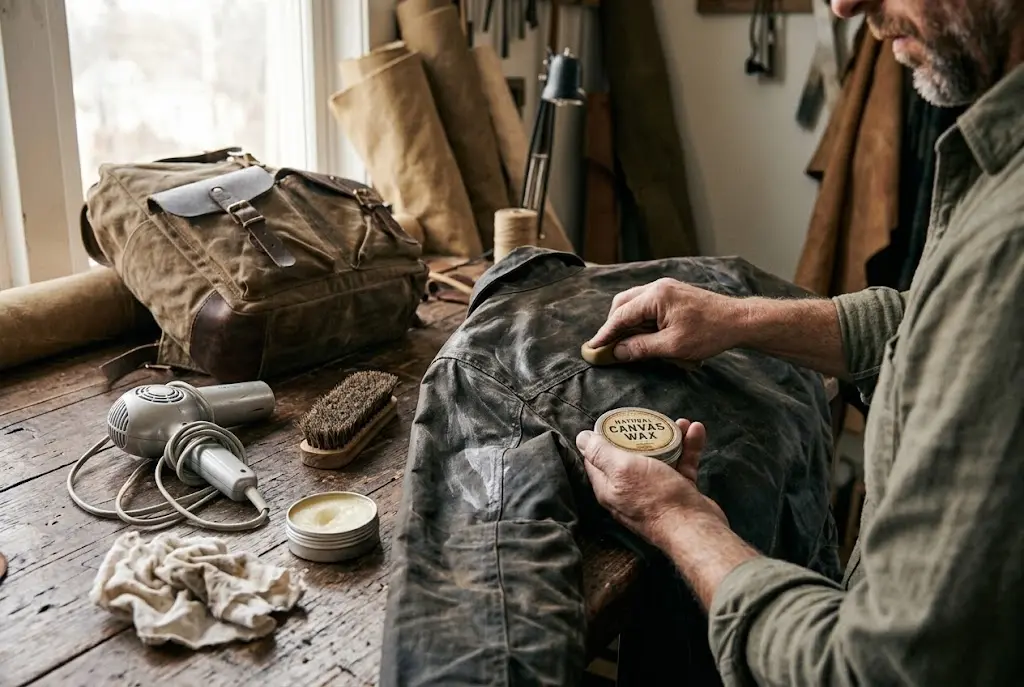
You don’t need specialized workshop tools to rewax your gear. All that is required are a few honest workshop staples:
-
A Tin of Natural Wax Compound: Use a blend of paraffin and beeswax formulated for canvas apparel (free of harsh petroleum distillates).
-
A Stiff-Bristled Horsehair or Utility Brush: For clearing dry dirt and loose trail grit.
-
A Clean Cotton Lint-Free Rag or Sponge: For rubbing wax into deep seams.
-
A Household Hairdryer or Heat Gun: To gently melt and draw the wax into the dense cotton fibers.
Step 1: Deep Surface Cleaning (No Detergents)
The Golden Rule: Never wash waxed canvas in a washing machine, and never use liquid laundry detergent. Detergents strip the natural wax emulsion entirely and ruin the canvas structure.
-
Lay your garment or bag flat on a clean table or workbench.
-
Use a stiff dry brush to remove dried mud, trail dust, and lint along folds and pocket creases.
-
For stubborn grime, take a damp sponge with cold, clean water and gently wipe down the surface.
-
Allow the fabric to air dry completely at room temperature before applying any wax.
Step 2: Warm the Wax and the Canvas
Wax adheres best when warm and pliable:
-
Place your tin of wax in a small bowl of hot water for 10–15 minutes to soften it into a spreadable, buttery consistency.
-
Use your hairdryer on a medium heat setting to gently warm the section of canvas you are preparing to treat. Pre-warming the cloth opens the weave and ensures even penetration.
Step 3: Apply in Uniform, Circular Motions
Work on one section at a time (front chest panels, sleeves, collar, or pack base):
-
Rub the wax bar or apply the softened wax with a cotton cloth directly onto the fabric using firm, circular strokes.
-
Pay special attention to high-friction and high-exposure areas: shoulder seams, pocket edges, cuffs, and the bottom panel of your backpack.
-
Aim for a thin, even coat. A light, consistent application always performs better than a thick, clumpy layer.
Step 4: Melt and Set with Heat
Once a section is coated, take your hairdryer and pass it slowly across the fabric:
-
Watch closely as the pale, waxy streaks turn glossy and vanish into the cotton fibers. The heat liquefies the wax, pulling it deep into the heart of the spun yarn.
-
If excess wax pools on the surface, wipe it away with your clean dry rag while it is still warm.
-
Continue this process methodically across every seam, sleeve, and pocket flap.
Step 5: Cure and Hang
Hang your freshly treated jacket or rucksack in a warm, dry room with good ventilation for 24 to 48 hours.
During this curing window, the wax settles into the fibers, leaving behind a smooth, matte finish that feels firm to the hand and sheds rain in crisp, running beads.
The Soul of Maintenance
Taking an hour on a quiet Sunday afternoon to rewax a trusted jacket connects you to your gear in a way modern consumer culture rarely allows. The warmth of the cloth, the scent of natural beeswax, and the satisfaction of watching weather resistance return under your hands make the process a rite of passage for any true traveler.
Look after your canvas, and it will look after you through every storm the road puts in your path.

Built to Outlive Trends: Why Heirloom Quality Still Matters in Modern Travel
 Rafi September 14, 2026